Column · @manuelsius026
Leak Detection and Plumbing Repairs in Oahu
A plumbing leak rarely announces itself at a convenient time. It may start as a faint stain under a cabinet, a warm spot near a water heater, a drain that smells wrong, or a water bill that no longer matches the way the property is being used. On Oahu, where homes, apartments, restaurants, retail spaces, and multi-unit buildings all depend on safe water supply and reliable drainage, small plumbing defects can become expensive quickly if they are misread or ignored.
Leak detection is not just about finding water. emergency plumber It is about understanding the plumbing system as a whole, knowing when a repair is simple and when it crosses into regulated work, and making decisions that protect the building as well as the people who use it. In Honolulu and throughout Oahu, plumbing work is governed by the City and County of Honolulu plumbing code. That code applies broadly to the design, installation, alteration, repair, relocation, replacement, addition, use, and maintenance of plumbing systems. In practical terms, that means a leaking pipe, a water heater issue, a drainage repair, or a sewer-related problem is not something to treat casually when the work affects the plumbing system.
A good plumber brings more than tools. The value is judgment. The right plumber Oahu property owners call for leak detection should know how to separate symptoms from causes, when to document conditions before opening a wall, when a permit may be required, and when a licensed contractor must be involved. That matters whether the job is at a single-family home, a condominium, a storefront, or a larger commercial property.
Why leak detection deserves careful attention
Leaks do not all behave the same way. A pipe under pressure can release water steadily and visibly. A drain leak may only appear when a fixture is used. A water heater connection can weep slowly, leaving mineral deposits before anyone notices standing water. A sewer line issue may not look like a “leak” at all in the early stage, but instead show up as recurring backups, odors, or drainage problems.
This is why leak detection is part investigation and part repair planning. The first visible sign is often not the real failure point. Water travels along framing, runs down pipe surfaces, follows gravity through cabinet bases, and sometimes appears far from the source. A ceiling stain below an upstairs bathroom may come from a fixture seal, a supply line, a drain connection, or plumbing hidden behind a wall. Repairing the wrong item wastes money and time, and it can leave the building exposed to continued damage.
Experienced plumbers tend to move deliberately. They ask when the stain appeared, which fixtures were in use, whether the problem is constant or intermittent, and whether any recent work was done. That last question matters because Honolulu’s plumbing code covers alteration, repair, replacement, and related work. If someone previously changed piping, replaced fixtures, or modified drainage without proper licensing or permitting where required, the leak may be only one part of a larger compliance problem.
The goal is not to make every small issue sound dramatic. A loose connection under a sink may be straightforward. A failed water heater component may be routine. But a professional plumber Honolulu property owners rely on should know when an apparently small repair touches code, permit, or safety concerns.
The regulatory side of plumbing repairs in Honolulu
Plumbing repairs in Oahu are not only technical tasks. They also sit inside a local regulatory framework. In Honolulu, permits are required for plumbing-related work such as installing, removing, altering, repairing, or replacing plumbing, drainage piping, fixtures, gas appliances, and water-heating or water-treating equipment. That language is broad, and it is one reason property owners should be cautious about hiring unqualified help for anything beyond the most minor maintenance.
Honolulu’s Department of Planning and Permitting states that electrical and plumbing work must be performed by contractors licensed by the State of Hawaii. Hawaii also maintains a professional licensing system, including a Board of Electricians and Plumbers, with an online database that can be used to verify license status, expiration dates, and disciplinary history. That verification step is simple, but it is often skipped until something goes wrong.
The plumbing code also allows the authority having jurisdiction to verify that inspected work was performed by a licensed plumbing journey worker and/or contractor. For property owners, managers, and business operators, this is not an abstract point. If a repair later becomes part of an inspection, insurance review, sale, renovation, or tenant dispute, proper licensing and permitting can matter as much as the repair itself.
A quick search for “plumber near me” can produce a long list of names. The search result is only a starting point. Before authorizing plumbing work, especially leak detection that may lead to opening walls, replacing piping, repairing drainage, or working on water-heating equipment, it is reasonable to ask whether the contractor is licensed in Hawaii and whether the work requires a permit. A professional should be able to answer clearly, without acting offended by the question.
What a plumber looks for during leak detection
The first job is to classify the problem. Is the leak on the supply side, the drainage side, a fixture, a water heater, or a sewer-related component? Each category behaves differently. Supply leaks usually involve pressurized water, so they may continue even when no fixture is being used. Drain leaks often appear only when water flows through a sink, tub, shower, washing machine standpipe, or other fixture drain. Water heater leaks can come from connections, valves, tank failure, or associated piping. Sewer and drainage issues may involve wastewater movement, fixture backups, or problems that require review under city wastewater and permitting processes.
A plumber should also look at the age and condition of surrounding components, not just the point where water is visible. If one connection has failed because of improper installation, stress, or corrosion, nearby connections may be vulnerable too. If water is appearing under a cabinet, the cabinet floor, wall penetration, trap assembly, fixture supply, and drain connection all need attention. If a ceiling is stained below a bathroom, the diagnosis should consider use patterns. Did the stain appear after a shower, after a toilet flush, or even when no one used the bathroom? Each answer points in a different direction.
Leak detection often involves restraint. Cutting into walls too early can create unnecessary damage. Waiting too long can also be costly. A seasoned plumber balances access, evidence, and urgency. In a commercial setting, that judgment becomes even more important because the repair may affect business operations, tenants, restrooms, kitchens, water heaters, or drainage serving multiple users.
Common signs that deserve a professional look
Not every plumbing symptom is an emergency, but certain conditions should not be ignored. Property owners and managers often wait because the first sign seems minor. By the time the problem becomes obvious, the repair may involve more than plumbing.
A short practical checklist helps separate watch-and-wait situations from issues that merit a call:
- A water stain that grows, darkens, or returns after drying.
- A fixture, cabinet, wall, or floor area that stays damp without a clear spill.
- A drain that repeatedly backs up after ordinary use.
- Unusual odor near drains, cleanouts, or plumbing walls.
- Water heater moisture, dripping, or visible deterioration around connected piping.
Those signs do not automatically identify the cause. They do justify a closer look by a qualified plumber. Recurring problems are especially important. A drain that needs constant clearing may be more than a simple clog. A small drip at a water heater may be a connection issue, but it may also signal a condition that requires water heater repair by a licensed professional. A sewer line problem may need more than drain cleaning if the underlying defect remains.
Emergency plumber calls: what counts as urgent
The word emergency gets used too loosely in the plumbing business. A true emergency is a condition where delay can cause active damage, sanitation risk, loss of essential service, or unsafe operation of equipment. Active water release inside a building usually qualifies. So does a drainage or sewer condition that affects sanitation. Water-heating problems can be urgent when they affect habitability, business operations, or equipment safety, though the exact response depends on the condition.
When calling an emergency plumber, the property owner’s description matters. “There is water on the floor” is less useful than “water is dripping from the ceiling below the upstairs bathroom even when no fixture is running,” or “the water heater area is wet and the moisture appears to be coming from the piping connection.” Specific observations help the plumber bring the right materials, ask the right questions, and decide whether the situation may involve permit-controlled work.
There is also a cost trade-off. Emergency work often costs more because it interrupts schedules and may require immediate mobilization. Still, waiting can be more expensive if the leak damages finishes, affects tenants, or creates a sanitation issue. The right decision depends on active risk. A slow stain that has not changed in weeks may be scheduled promptly during normal hours. Water spreading across a floor needs faster action.
Water heater repair and leak diagnosis
Water heaters deserve their own attention because they combine plumbing, water-heating equipment, and sometimes related safety considerations. Honolulu’s permit requirements include work involving water-heating equipment, and plumbing work must be handled by properly licensed contractors. That makes water heater repair different from replacing a simple household item.
A water heater leak may appear as moisture near the base, dripping from piping, discharge from a valve, or corrosion around fittings. The visual location of water does not always prove the source. Water can run down the outside of the tank or piping before collecting below. A plumber will typically separate connection leaks from equipment failure and evaluate whether repair or replacement is the sounder choice.
There is a point where repair becomes poor economics. If the leak is tied to a component that can be properly repaired, water heater repair may make sense. If the equipment itself has failed, continued patching may only delay the inevitable. The decision should consider safety, code compliance, the condition of connected piping, permit requirements, and the disruption caused by loss of hot water.
For commercial properties, water-heating issues can carry operational consequences. Restaurants, offices, medical spaces, and multi-tenant buildings may depend on hot water availability for daily use. A commercial plumber should think beyond the immediate drip and ask how the repair affects service continuity, access, scheduling, and required approvals.
Drain cleaning versus repairing the cause
Drain cleaning is one of the most requested plumbing services, and it is also one of the easiest to misunderstand. Clearing a blockage restores flow, but it does not always correct the underlying reason the blockage formed. A sink drain affected by ordinary buildup may respond well to cleaning. A recurring main drain backup may point toward a deeper defect, improper use, or a sewer line issue that needs further evaluation.
The distinction matters because drainage systems are part of the regulated plumbing system. Honolulu’s plumbing code applies to drainage piping, and permit requirements can apply to repairing, replacing, altering, or installing related components. A service call that begins as drain cleaning can become a more involved plumbing repair if damaged piping, improper connections, or sewer-related defects are found.
A responsible plumber explains this before the work expands. There is nothing wrong with starting conservatively, especially when the symptom is limited. But if the same line backs up again and again, treating every visit as a standalone clog can become expensive. At that point, property owners should ask whether sewer line repair, drainage repair, or a permitted plumbing correction may be needed.
Sewer line repair and city review
Sewer line repair carries added weight because it affects wastewater infrastructure. Honolulu wastewater guidance emphasizes protecting sewer infrastructure and notes that sewer connection and related wastewater issues involve city review and permitting processes. That is a strong reason not to improvise with sewer-related work.
Sewer problems can show up in ways that are inconvenient but easy to dismiss at first. A drain may gurgle. Multiple fixtures may drain poorly at the same time. Odor may appear near a cleanout or plumbing area. A backup may clear temporarily after service, then return. These patterns deserve attention because they may involve conditions beyond a single fixture trap or branch line.
The correct repair path depends on the location and nature of the problem. Some drainage issues remain inside the building plumbing system. Others may involve sewer connection concerns. Because of the permitting and review environment, the plumber should be able to explain what portion of the system appears affected, whether the repair is within the scope of ordinary plumbing service, and when city review or permits come into play.
For owners of commercial properties or multi-unit buildings, documentation is especially important. A sewer-related repair may affect tenants, neighboring units, operations, and future inspections. Written descriptions, permit records where required, and confirmation that licensed personnel performed the work help protect the property owner long after the immediate problem is resolved.
Choosing a plumber in Honolulu or elsewhere on Oahu
Many people choose a plumber under stress. Water is leaking, a restroom is out of service, or a tenant is waiting for an answer. That urgency can make the cheapest or fastest option look attractive. Speed matters, but not at the expense of licensing, code compliance, or competent diagnosis.
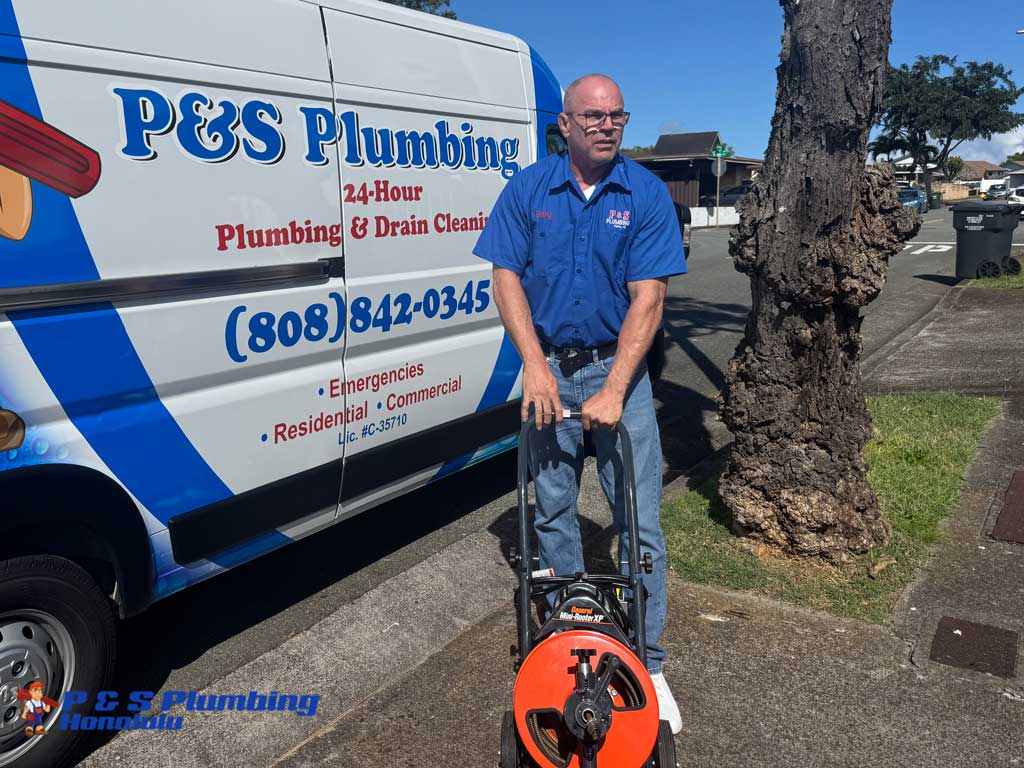
A good plumber Honolulu residents and businesses can trust should be willing to discuss scope before starting work. If a leak detection visit may lead to opening a wall, replacing piping, repairing drainage, or touching water-heating equipment, the conversation should include whether a leak detection company permit is required. If the work is commercial, the discussion should also include scheduling, shutdowns, access, and documentation.
License verification is not rude. Hawaii provides an online way to verify license status, expiration dates, and disciplinary history. Property owners do not need to become code experts, but they should confirm that the person or company taking responsibility for regulated work is properly licensed. That is particularly important when the work may later be inspected or reviewed by an authority having jurisdiction.
A concise hiring screen can prevent many problems:
- Ask for the contractor’s Hawaii license information before approving regulated work.
- Confirm whether the proposed repair requires a permit.
- Request a clear description of what will be opened, replaced, repaired, or tested.
- Ask how the plumber will document findings and completed work.
- For commercial jobs, discuss business interruption and after-hours scheduling before work begins.
The answers do not need to be complicated. In fact, clear and direct answers are a good sign. Vague promises, pressure to skip permits, or reluctance to identify who is licensed should make an owner pause.
Residential leak repairs: small spaces, real consequences
Residential plumbing repairs often happen in tight areas: under vanities, behind laundry equipment, inside walls, near tubs, around water heaters, or beneath kitchen cabinets. The space may be small, but the consequences can spread into flooring, drywall, cabinetry, and adjacent rooms. A homeowner may see a drip and assume the repair is limited to one fitting. Sometimes that is true. Other times the visible drip is the final symptom of a hidden problem.
One common challenge is access. A plumber may need to remove a cabinet panel, open a wall, or work around finished surfaces. The best approach is usually the least destructive one that still allows a reliable repair. A temporary patch may look attractive if it avoids opening a surface, but it can be a poor choice if the pipe or connection cannot be inspected properly. Conversely, tearing into finishes without adequate diagnosis creates unnecessary restoration work.
Because Honolulu’s plumbing code applies to repair and maintenance of plumbing systems, homeowners should be careful with do-it-yourself work that alters piping, drainage, fixtures, gas appliances, water-heating equipment, or water-treating equipment. Even if the owner’s intention is simply to stop a leak, the work may fall into a regulated category. A licensed plumber can help separate routine homeowner observations from work that requires professional handling.
Commercial plumber considerations
Commercial plumbing raises the stakes. A leak in a home affects a household. A leak in a commercial space can affect employees, customers, tenants, inventory, equipment, restrooms, food service, or common areas. Even a small repair may require coordination with property management, building access, tenant schedules, and sometimes city review.
The Honolulu Board of Water Supply handles water-service and permitting-related matters for projects. Its guidance notes that large commercial developments often require master plans and more complex review of water-system capacity. Not every commercial leak repair is a development project, but the broader point is important: commercial plumbing does not exist in isolation. Water service, capacity, permitting, and system design can become part of the conversation, especially when repairs lead to alterations or larger upgrades.
A commercial plumber should be comfortable working within that structure. The job may begin with leak detection in a restroom wall, but the repair plan might need to account for shutdown timing, code requirements, inspection, tenant communication, and documentation. For restaurants, retail spaces, offices, and multi-unit buildings, the best repair is not only technically sound. It is planned well enough to reduce disruption and withstand later review.
The cost of delaying plumbing repairs
Delay has a way of turning a plumbing repair into a building repair. Water damages materials gradually at first, then suddenly. A cabinet base swells. Drywall softens. Flooring edges lift. Odor appears. Tenants lose confidence that the issue is being handled. None of that improves the underlying pipe, fixture, drain, water heater, or sewer condition.
Still, there is a difference between thoughtful scheduling and neglect. Not every plumbing defect requires an after-hours emergency response. A professional can help determine the level of urgency. The problem is waiting without a plan. If a stain returns, a drain clogs repeatedly, a water heater shows persistent moisture, or a sewer odor remains unexplained, the building is giving useful information. Ignoring that information rarely saves money.
The repair decision should consider the whole cost, not only the plumber’s invoice. That includes property damage, downtime, repeated service calls, permit compliance, inspection concerns, and the risk of hiring someone unqualified. A properly licensed plumber may not always be the cheapest bid, but plumbing systems are not a good place to buy uncertainty.
What property owners can do before the plumber arrives
A few simple actions can make a service call more productive. Observe carefully before cleaning everything up. If water is actively spreading, protect the property first, but try to note where the water appeared, what fixtures were being used, and whether the leak stopped when use stopped. If safe and practical, clear access around the affected fixture, water heater, cabinet, or drain area. For commercial properties, identify who can authorize work and who can provide access to mechanical rooms, restrooms, tenant spaces, or utility areas.
Avoid making permanent changes before the plumber arrives. Temporary containment is different from repair. Towels, buckets, and shutting down use of an affected fixture can reduce damage. Taking apart piping, applying random sealants, or altering components can complicate diagnosis and may create compliance problems if the work falls under regulated plumbing activity.
Pictures can help, especially when a leak appears intermittently. A photo of water on the floor, a stain before it dries, or moisture near a water heater connection gives the plumber useful context. So does a short timeline. “This happened after the upstairs shower ran for ten minutes” is far more valuable than “it leaks sometimes.”
Repair quality is measured after the wall is closed
A plumbing repair is not successful simply because the visible water stopped during the visit. It should address the cause, comply with applicable requirements, and be performed by qualified personnel when the work is regulated. In Honolulu, that means respecting the plumbing code, permit requirements, and licensing rules that apply to plumbing systems and related equipment.
Good repair work also leaves a clear trail. Property owners should understand what failed, what was repaired or replaced, whether a permit was required, and who performed the work. For larger repairs, especially commercial jobs, that documentation becomes part of responsible property management. If inspected work is later reviewed, the authority having jurisdiction may verify that it was performed by a licensed plumbing journey worker and/or contractor.
Leak detection and plumbing repair are not separate ideas. Accurate detection prevents unnecessary work. Proper repair prevents repeat damage. Licensing and permitting protect the owner, the occupants, and the public systems that water and wastewater infrastructure depend on. Whether the search begins with “plumber near me,” “plumber Honolulu,” “emergency plumber,” or “commercial plumber,” the best choice is the same: hire someone qualified to diagnose carefully, repair correctly, and work within the rules that govern plumbing in Oahu.
Name: P&S Plumbing
Address: 1714 Homerule St Bay 1, Honolulu, HI 96819, United States
Phone: 808-842-0345
Website: https://www.psplumbinghawaii.com/locations/honolulu/
Email: [email protected]
Hours:
Sunday: Open 24 hours
Monday: Open 24 hours
Tuesday: Open 24 hours
Wednesday: Open 24 hours
Thursday: Open 24 hours
Friday: Open 24 hours
Saturday: Open 24 hours
Time zone: Hawaii-Aleutian Time
Open-location code / Plus code: 84F8+HP Honolulu, Hawaii, USA
Map/listing URL: https://www.google.com/maps/search/?api=1&query=Google&query_place_id=ChIJl_3qEMhvAHwRtgTEMKE27zE
Embed iframe:
Socials:
https://www.facebook.com/psplumbinghonolulu/
https://x.com/PSPlumbingoahu
https://www.youtube.com/@PSPlumbingHonolulu/
https://soundcloud.com/p-s-plumbing-honolulu
P&S Plumbing provides plumbing services from its Honolulu location on Homerule Street.
The official Honolulu page lists drain cleaning, plumbing repairs, water heater repair, water heater installation, sewer line repair, and 24-hour emergency plumbing services.
P&S Plumbing serves residential and commercial customers across Honolulu and Oahu, including Kalihi, Kakaako, Ala Moana, Waikiki, Moiliili, Makiki, Manoa, Aliamanu, Aiea, Pearl City, Waipahu, Ewa Beach, Kapolei, Hawaii Kai, and nearby communities.
The Honolulu shop is listed at 1714 Homerule St Bay 1, Honolulu, HI 96819, near Kalihi and local routes serving central Honolulu.
The official website lists Hawaii State License Number CT-35710 and describes the company as licensed and insured.
Customers can contact P&S Plumbing for drain cleaning, hydro jetting, leak detection, water heater service, sewer line repair, fixture repair and installation, kitchen plumbing, bathroom plumbing, commercial plumbing, residential plumbing, and emergency plumbing needs.
For plumbing service in Honolulu and Oahu, call 808-842-0345 or visit https://www.psplumbinghawaii.com/locations/honolulu/
The public map listing uses plus code 84F8+HP Honolulu, Hawaii, USA and can help customers find P&S Plumbing near Homerule Street in Honolulu.
Popular Questions About P&S Plumbing
What does P&S Plumbing provide in Honolulu?
P&S Plumbing provides drain cleaning, plumbing repairs, water heater repair and installation, sewer line repair, hydro jetting, leak detection, fixture repair and installation, bathroom plumbing, kitchen plumbing, residential plumbing, commercial plumbing, and 24-hour emergency plumbing services.
Where is P&S Plumbing located in Honolulu?
P&S Plumbing is listed at 1714 Homerule St Bay 1, Honolulu, HI 96819, United States. The official website also lists the address as 1714 Homerule Street 1, Honolulu, HI 96819.
What phone number should Honolulu customers call?
The official Honolulu page and contact page list 808-842-0345 for Honolulu-Oahu service.
What is the email address for P&S Plumbing?
The email address is [email protected].
What are P&S Plumbing’s Honolulu hours?
The official Honolulu page and supplied listing show P&S Plumbing as open 24 hours a day, seven days a week, Hawaii-Aleutian Time.
Is P&S Plumbing licensed?
The official Honolulu page lists Hawaii State License Number CT-35710. Customers can confirm license status directly with the relevant Hawaii licensing authority before hiring.
Does P&S Plumbing offer emergency plumbing in Honolulu?
Yes. The official Honolulu page lists 24-hour emergency plumbing services for urgent plumbing issues.
Does P&S Plumbing handle water heaters?
Yes. The official Honolulu page lists water heater repair, water heater installation, tankless water heater installation, solar water heater installation, and traditional water heater installation.
Does P&S Plumbing provide commercial plumbing?
Yes. The official Honolulu page lists commercial plumbing services along with residential plumbing services.
How do I contact P&S Plumbing?
Call 808-842-0345, visit https://www.psplumbinghawaii.com/locations/honolulu/, or use the map URL: https://www.google.com/maps/search/?api=1&query=Google&query_place_id=ChIJl_3qEMhvAHwRtgTEMKE27zE. Social profiles: Facebook, X, YouTube, and SoundCloud.
Landmarks Near Honolulu, HI
Homerule Street: The street listed for P&S Plumbing’s Honolulu location and a practical reference point for finding the shop.
Kalihi: A central Honolulu area near Homerule Street with homes, businesses, warehouses, and local service routes.
Dillingham Boulevard: A major nearby corridor serving Kalihi, Iwilei, Honolulu Harbor, and surrounding business areas.
Nimitz Highway: A key Honolulu route connecting the airport, harbor, downtown, and central business districts.
H-1 Freeway: A major Oahu highway used to reach Honolulu neighborhoods and communities across the island.
Honolulu Harbor: A major commercial waterfront landmark near downtown and industrial service areas.
Daniel K. Inouye International Airport: A major transportation landmark west of central Honolulu and near key Oahu service routes.
Downtown Honolulu: A central business and residential district served by local plumbing contractors.
Chinatown Honolulu: A nearby historic district with restaurants, shops, apartments, and older plumbing infrastructure.
Iwilei: A nearby commercial and industrial area with warehouses, retail properties, and service businesses.
Kakaʻako: A growing residential, retail, and commercial district southeast of downtown Honolulu.
Ala Moana Center: A major Honolulu retail landmark and citywide reference point.
Waikiki: A major visitor, hotel, condo, and residential area within P&S Plumbing’s broader Honolulu service area.
Moanalua: A Honolulu community listed within P&S Plumbing’s broader Oahu service-area references.
Pearl Harbor area: A major Oahu landmark west of Honolulu and near residential and commercial service routes.
For drain cleaning, plumbing repairs, water heater service, sewer line repair, hydro jetting, leak detection, fixture installation, commercial plumbing, residential plumbing, or 24-hour emergency plumbing near these Honolulu and Oahu landmarks, contact P&S Plumbing at 808-842-0345 or visit https://www.psplumbinghawaii.com/locations/honolulu/