Column · @manuelsius026
Emergency Plumber Calls and Honolulu Code Requirements
A plumbing emergency rarely arrives at a convenient hour. A drain backs up before a restaurant opens. A water heater fails when a family has guests in town. A leak appears behind a wall, and the first sign is not a drip but a spreading stain, a soft patch of flooring, or water where water should not be. In Honolulu, the urgent part of the call is only half the story. The other half is whether the work is handled in a way that respects local code, permit requirements, and licensing rules.
That distinction matters. A rushed repair may stop water for the moment, but if it involves plumbing, drainage piping, fixtures, gas appliances, water-heating equipment, or water-treating equipment, Honolulu’s rules may require more than a quick fix. The City and County of Honolulu plumbing code applies broadly to plumbing systems, including their design, installation, alteration, repair, relocation, replacement, addition, use, and maintenance. That scope is wide enough to cover many calls people casually describe as “just a repair.”
For property owners, managers, and business operators, the practical lesson is simple: when searching for a plumber near me during an emergency, response time should not be the only question. Licensing, code awareness, and an understanding of when permits enter the picture can affect safety, insurance conversations, future inspections, property transfers, and the durability of the work itself.
What counts as a plumbing emergency in practical terms
The word “emergency” can mean different things depending on the property. In a home, a failed water heater may feel urgent because it disrupts bathing, laundry, and cleaning. In a medical office, restaurant, hotel, school, or commercial kitchen, the same failure may affect operations, sanitation, customer service, and revenue. A clogged lavatory drain in a single-family house may be annoying. A clogged main drain in a ground-floor retail space can become a business interruption.
The common thread is loss of control. Water is escaping, waste is not draining, hot water is unavailable, or a plumbing fixture cannot be used safely. Emergency plumber calls often involve stopping immediate damage first, then moving into diagnosis and permanent repair. That first phase may involve isolating a fixture, shutting off water, identifying whether a blockage is local or system-wide, or determining whether a leak is visible, concealed, or tied to equipment.
Honolulu’s code requirements do not disappear because a situation is urgent. They shape what happens after the immediate hazard is contained. A licensed plumber Honolulu residents call for emergency service should be prepared to distinguish between temporary stabilization and regulated plumbing work. That judgment matters because the city requires permits for installing, removing, altering, repairing, or replacing plumbing, drainage piping, fixtures, gas appliances, and water-heating or water-treating equipment.
A homeowner may see only a leaking line or failed fixture. A qualified plumber sees the larger system: connections, venting, drainage, water heating, fixture performance, and whether the proposed work changes, repairs, or replaces regulated components. That is where emergency service and code compliance meet.
The Honolulu plumbing code is broader than many owners realize
Many people think of plumbing code only when a new building is constructed or a major renovation is underway. Honolulu’s plumbing code reaches much further than new construction. It applies to design and installation, but also to alteration, repair, relocation, replacement, addition, use, and maintenance of plumbing systems.
That language is important because emergency work often falls into the repair or replacement category. A leaking water heater may require water heater repair, but if the equipment is replaced, permitting requirements may apply. A drain cleaning call may reveal damaged drainage piping, shifting the job from clearing a blockage to repairing or replacing part of the drainage system. A leak detection visit may identify a concealed pipe failure that cannot be resolved without opening walls and repairing plumbing. A sewer line repair is even more clearly tied to regulated drainage and wastewater infrastructure.
Code compliance is not a paperwork exercise detached from the work. Plumbing systems carry potable water, remove wastewater, connect to fixtures and equipment, and interact with public infrastructure. Mistakes can affect more than one room or one tenant. In multi-unit buildings and commercial properties, a plumbing decision in one space may affect adjacent spaces, shared systems, or downstream infrastructure.
For that reason, the city’s permit and inspection framework exists to create accountability. The authority having jurisdiction may verify that inspected work was performed by a licensed plumbing journey worker and/or contractor. That means the person doing the work, and the contractor responsible for it, can matter just as much as the materials installed.
Licensing is not optional for plumbing work
Honolulu’s Department of Planning and Permitting states that electrical and plumbing work must be performed by contractors licensed by the State of Hawaii. This is one of the most important facts for anyone placing an emergency call. A fast arrival by an unqualified person can create bigger problems than a slower arrival by a properly licensed professional.
Hawaii maintains a professional licensing structure that includes a Board of Electricians and Plumbers. The state also provides an online way to verify license status, expiration dates, and disciplinary history. Property owners do not need to become licensing experts, but they should be willing to ask direct questions. A legitimate plumber Oahu customers can rely on should not be offended when asked about licensing. In professional trade work, that question is routine.
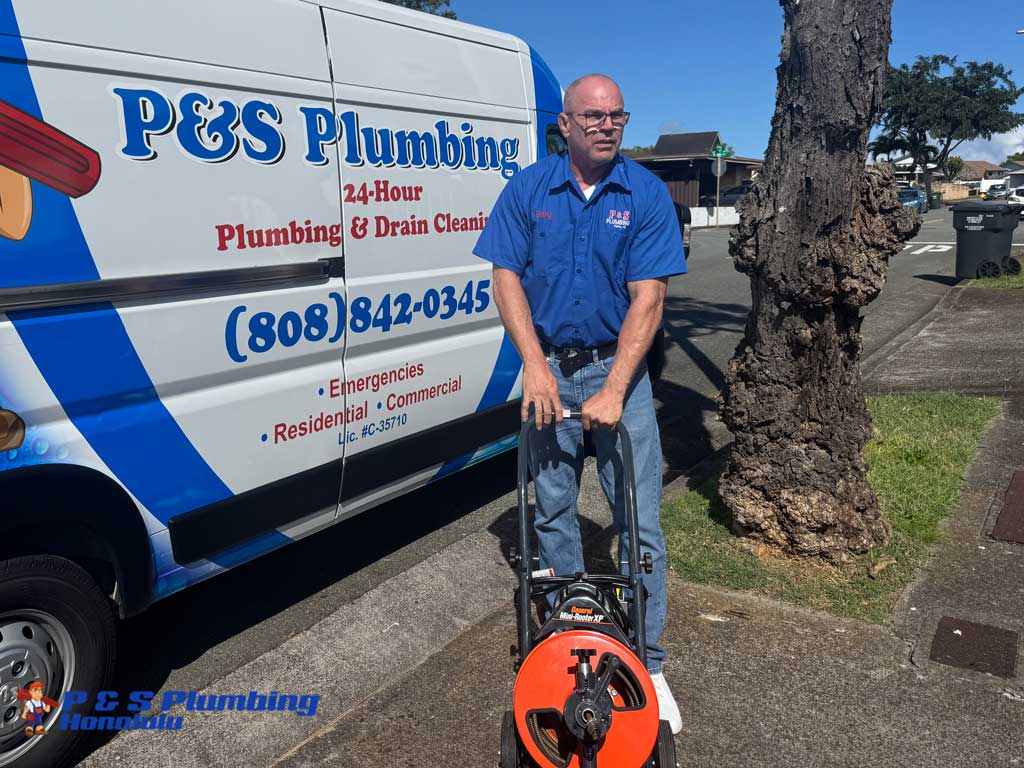
Licensing protects the customer in several ways. It gives the city a basis for accountability, supports proper permitting, and helps ensure the work is being done by someone recognized under the state’s trade licensing system. It also helps separate true plumbing contractors from general handymen who may be comfortable with small visible tasks but are not authorized to perform regulated plumbing work.
During a stressful leak or backup, it is tempting to hire whoever answers the phone first. That decision can be costly if the work later needs to be corrected, documented, inspected, or explained to a building manager, insurer, buyer, or public agency. The better move is to treat licensing as part of the emergency response, not as an afterthought.
Permits and emergency calls: where the tension appears
The hardest conversations often happen when the immediate problem is real, but the permanent solution touches permitted work. A customer wants the water back on. A tenant wants the restroom usable. A business owner wants to reopen. The plumber has to manage urgency without ignoring the rules.
Honolulu requires permits for plumbing-related work such as installing, removing, altering, repairing, or replacing plumbing, drainage piping, fixtures, gas appliances, and water-heating or water-treating equipment. That does not mean every visit starts with the same level of paperwork before a plumber can even look at the problem. It does mean that once the work moves into regulated installation, removal, alteration, repair, or replacement, permitting must be considered.
A good emergency plumber communicates this early. They may say, in plain language, “We can make the area safe and diagnose the issue now, but the permanent repair may need to be permitted.” That is not stalling. It is a sign the contractor understands the difference between stopping immediate harm and completing compliant work.
Customers sometimes hear the word “permit” and worry only about delay. Delay can be a real concern, especially for occupied homes and businesses. But unpermitted work can create its own delays later. If a property owner later seeks other approvals, sells the property, renovates the same area, or faces an inspection question, undocumented plumbing work may become a problem. The short-term gain of skipping process can turn into a long-term liability.
A practical call script for property owners
When water is moving where it should not, nobody wants a long interview. Still, a few focused questions can prevent poor decisions. If you are calling a plumber near me in Honolulu during an urgent situation, gather the facts that help the contractor assess risk and dispatch appropriately.
- Ask whether the company is licensed in Hawaii to perform plumbing work.
- Describe whether the issue involves water supply, drainage, hot water equipment, gas appliances, or wastewater.
- Say whether the property is residential, commercial, or part of a multi-unit building.
- Ask whether the likely repair may require a Honolulu plumbing permit.
- Confirm whether the plumber can document the work performed and explain next steps if inspection or permitting is needed.
That short conversation does two things. It helps the plumber triage the call, and it tells you whether the person on the other end understands local responsibilities. A vague answer about licensing or permits is a warning sign. So is a promise to “just take care of it” without asking what system is involved.
Water heater repair and replacement
Water heater calls are among the most common urgent plumbing requests because the problem is felt immediately. No hot water affects showers, dishwashing, laundry, cleaning, and in commercial settings, normal operations. In Honolulu, water-heating equipment is specifically within the category of plumbing-related work that may require permits when installed, removed, altered, repaired, or replaced.
The distinction between water heater repair and water heater replacement matters. A service call may involve diagnosing a leak, checking connections, evaluating whether the unit or related piping is the issue, and determining whether a repair is possible. If equipment must be replaced, that work is not merely an appliance swap in the casual sense. It touches plumbing code and permit requirements.
The same care applies when water-treating equipment is involved. If a property uses such equipment and it is installed, altered, repaired, removed, or replaced, the city’s permit framework may apply. Property owners should resist the assumption that equipment tucked into a closet, garage, utility area, or commercial back room is outside official review.
A licensed plumber can also help separate symptoms from causes. Water around a water heater may come from the unit, nearby piping, a relief connection, drainage, or another source altogether. Acting too quickly without proper diagnosis can lead to replacing equipment that was not the root problem, or missing a code issue that remains after the emergency visit.
Drain cleaning that reveals a bigger problem
Drain cleaning sounds straightforward until the blockage keeps returning or affects multiple fixtures. A simple clog at one fixture is different from a drainage piping issue. When drainage piping must be repaired, altered, or replaced, Honolulu’s permit requirements become relevant.
This is a common edge case. A customer calls for drain cleaning because a sink, shower, floor drain, or toilet is slow or backed up. The plumber clears the line, but the behavior of the system suggests a deeper defect. At that point, the call changes character. It is no longer only about clearing an obstruction. It may involve investigating drainage piping, fixtures, and possibly sewer-related components.
A professional plumber should explain that change clearly. Customers deserve to know when a service task has become a repair task, and when that repair falls under the city’s plumbing code. In commercial buildings, the stakes are often higher because repeated drainage failures can affect tenants, customers, employees, and operations. A commercial plumber should be particularly careful about documentation, access, building management coordination, and the possibility of city review where required.
Drain issues also remind property owners that plumbing systems are connected. A symptom in one room can be caused by a condition elsewhere. Treating every backup as an isolated clog may be cheaper on the first visit, but repeated calls often cost more than proper diagnosis and compliant repair.
Leak detection and hidden damage
Leak detection occupies a difficult space because the first task is often investigative. The plumber may need to determine whether the water is coming from a supply line, drainage component, fixture connection, water-heating equipment, or another source. Not every investigation is the same as a permitted repair, but the repair that follows may fall squarely within code requirements.
Concealed leaks create pressure to act quickly. Water can damage finishes, cabinets, flooring, walls, ceilings, and neighboring units. In a multi-unit or commercial setting, the person experiencing the damage may not be the owner of the failed plumbing. That makes documentation and professional handling even more important.
The best leak detection work is disciplined. It avoids unnecessary demolition, but it also avoids wishful thinking. A stain below a bathroom is not proof of one specific failure. Water travels. It follows framing, pipe penetrations, ceiling cavities, wall surfaces, and gravity. A visible wet spot may be several feet from the source.
Once the source is identified, the plumber must decide what work is required. If plumbing, drainage piping, fixtures, or related equipment must be repaired, replaced, altered, removed, or installed, Honolulu’s permitting rules may apply. A licensed contractor should be able to explain that boundary without making the customer feel trapped. Good communication reduces anxiety. It also helps the owner make decisions that will stand up later.
Sewer line repair and wastewater responsibilities
Sewer line repair is one of sewer line repair services the clearest examples of why emergency plumbing and public rules overlap. Wastewater systems are not just private conveniences. They connect to broader infrastructure that must be protected. Honolulu wastewater guidance emphasizes protecting sewer infrastructure and notes that sewer connection and related wastewater issues involve city review and permitting processes.
A sewer-related emergency can be disruptive and unpleasant. It may involve backups, unusable fixtures, odors, sanitation concerns, or business closure. The desire for an immediate fix is understandable. Still, sewer connection and wastewater matters are precisely the kind of work where city review and proper permitting may be part of the process.
Property owners should be cautious about anyone who treats sewer work as informal. A sewer line repair can affect drainage performance, public systems, and future serviceability. It may also require coordination beyond the plumber’s own truck and tools. When the work involves city review, the contractor’s familiarity with process matters.
For commercial properties, this can become more layered. Restaurants, retail centers, offices, and larger developments may have building management, tenants, maintenance staff, and public agencies all concerned with the outcome. A commercial plumber who understands code and permitting can help organize the response so the emergency is addressed without creating avoidable compliance problems.
Board of Water Supply considerations for larger projects
Not every emergency call involves the Honolulu Board of Water Supply. A small repair inside a residence may not raise the same issues as a large development or significant commercial project. Still, the Board of Water Supply handles water-service and permitting-related matters for projects, and large commercial developments may require master plans and more complex review of water-system capacity.
That matters for owners and managers who are not just fixing a leak, but planning upgrades after repeated failures. A hotel, retail property, apartment project, industrial site, or other larger facility may discover through emergency service that the existing system no longer supports current needs, future plans, or reliable operation. At that point, the conversation expands from emergency repair to planning, capacity, and formal review.
A plumber can be part of that conversation, but larger projects often require coordination among owners, design professionals, contractors, and agencies. The lesson is not that every urgent call becomes a master-planned project. It is that some emergencies reveal a system problem bigger than the failed component. When water service capacity or major project permitting is involved, the process becomes more complex.
Residential calls versus commercial calls
The same plumbing code framework applies broadly, but the practical context differs between a home and a business. Residential owners usually care first about damage control, household disruption, cost, and safe use of fixtures. Commercial owners and tenants have additional pressures: opening hours, customer access, employee restrooms, food service operations, lease obligations, and coordination with property management.
A commercial plumber must often think in layers. The immediate leak or blockage is one layer. Code and permit obligations are another. Tenant communication, access restrictions, after-hours work, and documentation form yet another. Even when the technical repair is familiar, the operating environment can be more demanding.
Commercial properties also tend to have less tolerance for repeated failures. A recurring drain issue in a restaurant or retail center can become a pattern that affects revenue and reputation. A water heater failure in a business may trigger operational consequences faster than the same failure in a residence. That is why commercial emergency service should include clear reporting: what was found, what was done immediately, what remains to be repaired, and what permit or inspection steps may be required.
Homeowners benefit from the same clarity. A professional plumber Oahu residents trust should be able to tell a homeowner whether the issue appears isolated, whether further work is recommended, and whether code or permit requirements are likely involved. The conversation can be simpler than on a commercial site, but it should not be casual about regulated work.
Why documentation matters after the water is stopped
Once the floor is dry and the fixture works again, many owners want to move on. That is natural, but plumbing work should leave a paper trail appropriate to the job. Documentation helps establish who performed the work, what was repaired or replaced, and whether permit steps were discussed or completed.
This is especially important because Honolulu’s plumbing code allows the authority having jurisdiction to verify that inspected work was performed by a licensed plumbing journey worker and/or contractor. If a repair is later inspected, questioned, or tied into future work, the owner benefits from having records.
Documentation does not need to be dramatic. It can include invoices, descriptions of work, permit information where applicable, photographs, equipment information, and notes about recommendations. For businesses, records may also help internal facilities teams track recurring problems. For homeowners, they can help with future sale disclosures, renovation planning, or warranty conversations.
Poor documentation is a pattern worth noticing. If a contractor avoids written descriptions, refuses to identify licensing, or minimizes permit questions, the owner is left carrying unnecessary risk. A professional plumber should be comfortable putting the basics in writing.
How to evaluate a plumber before an emergency happens
The worst time to evaluate a plumbing company is while standing in water. Property owners who prepare in advance make better decisions under pressure. This is especially true for property managers, associations, landlords, and commercial operators who may need service outside normal hours.
A useful pre-emergency review does not require a large procurement process. It requires confirming that the company is properly licensed, understands Honolulu plumbing permit requirements, handles the services your property is likely to need, and can communicate clearly during urgent calls. If your property has water-heating equipment, recurring drainage concerns, or older piping, discuss those conditions before a crisis.
Consider also whether the plumber’s service range matches your likely needs. A company that handles leak detection, drain cleaning, water heater repair, and sewer line repair may be better prepared to diagnose connected problems than someone focused on only one narrow task. For commercial sites, ask specifically about commercial plumber experience, because building access, tenant coordination, and operational impacts can complicate even ordinary repairs.
The phrase plumber near me is useful for finding nearby options, but proximity alone is not qualification. In Honolulu, the better filter is nearby, licensed, code-aware, and capable of explaining permit implications without confusion.
Red flags during an emergency plumbing call
A few warning signs should slow the decision, even when the situation feels urgent.
- The person will not confirm Hawaii licensing or gives an evasive answer.
- The contractor dismisses all permit questions before understanding the work.
- The proposed repair involves plumbing, drainage piping, fixtures, gas appliances, or water-heating equipment, but no one discusses code.
- The company refuses to provide a written description of work performed.
- The person pressures the owner to approve permanent work immediately without explaining diagnosis or alternatives.
These signs do not prove bad intent in every case, but they are enough to justify calling another licensed plumber Honolulu property owners can verify. Emergency conditions require speed, not blind trust.
Temporary stabilization versus permanent repair
One of the most useful distinctions in emergency plumbing is temporary stabilization versus permanent repair. Temporary stabilization is about reducing immediate harm. It may involve shutting off water, isolating a fixture, stopping use of an affected area, clearing a blockage enough to restore basic function, or identifying the source of a leak. Permanent repair addresses the actual failed component or system condition.
The code and permit conversation often becomes more serious during permanent repair. If plumbing, drainage piping, fixtures, gas appliances, water-heating equipment, or water-treating equipment will be installed, removed, altered, repaired, or replaced, Honolulu’s permit requirements may apply. That is why a responsible plumber may separate the emergency visit from the follow-up repair plan.
This separation can frustrate customers who want everything solved at once. Sometimes the complete repair can proceed quickly. Sometimes access, parts, permitting, inspection, or coordination make a staged approach more responsible. The key is honest explanation. A contractor should not hide behind vague claims, but the owner should also understand that code-compliant work may require more structure than a quick patch.
The cost of ignoring code
The cost of noncompliant work is not always visible on day one. A poorly handled repair may function for a while. The trouble may appear later, when another plumber opens the wall, when an inspector asks who performed the work, when a property transaction raises questions, or when a repeated failure reveals that the original repair did not address the system correctly.
Ignoring licensing and permitting can also shift risk onto the owner. If the person performing the work was not properly licensed, or if required permits were skipped, the owner may have fewer clean answers when questions arise. For commercial properties, that uncertainty can affect management, tenants, and operations.
This does not mean every plumbing problem should become a bureaucratic ordeal. It means the owner should expect the contractor to understand the city’s framework and apply professional judgment. A small diagnostic visit, a code-regulated repair, a water heater replacement, and a sewer connection issue are not all the same. The right response depends on the work, the property, and the applicable requirements.
What a code-aware emergency plumber brings to the job
A code-aware emergency plumber brings more than tools. They bring judgment. They know when to focus on immediate damage control, when to document existing conditions, when to flag permit requirements, and when to advise the owner that a larger process may be involved. They also understand that Honolulu plumbing work operates under city code and state licensing expectations.
That professionalism shows up in small moments. The plumber asks what fixtures are affected rather than assuming the closest fixture is the source. They ask whether the property is commercial or residential. They explain whether the work appears to involve repair or replacement of regulated components. They do not promise that permits are irrelevant before knowing the scope. They provide records that make sense after the emergency has passed.
For owners, that kind of service may not always be the cheapest first call, but it is often the most efficient path over time. Plumbing systems punish shortcuts. Water and waste find weak points. Code requirements exist because the consequences of poor plumbing work can extend beyond inconvenience.
Honolulu owners should treat urgent plumbing as regulated work
Emergency plumbing in Honolulu sits at the intersection of speed, safety, licensing, and code. The city’s plumbing code applies broadly to plumbing systems, including repair and maintenance as well as installation and replacement. Permits are required for many forms of plumbing-related work, including installing, removing, altering, repairing, or replacing plumbing, drainage piping, fixtures, gas appliances, and water-heating or water-treating equipment. Plumbing work must be performed by contractors licensed by the State of Hawaii, and license status can be verified through the state’s professional licensing system.
Those facts should shape how owners respond to a leak, backup, failed water heater, drainage problem, or sewer issue. Call quickly, but ask the right questions. Stop immediate damage, but do not ignore the requirements that govern permanent repair. Choose a plumber who understands Honolulu, not just the tool work, but the responsibilities that come with working on regulated plumbing systems.
A good emergency response restores control. A compliant repair protects the property after the truck leaves. In Honolulu, both matter.
Name: P&S Plumbing
Address: 1714 Homerule St Bay 1, Honolulu, HI 96819, United States
Phone: 808-842-0345
Website: https://www.psplumbinghawaii.com/locations/honolulu/
Email: [email protected]
Hours:
Sunday: Open 24 hours
Monday: Open 24 hours
Tuesday: Open 24 hours
Wednesday: Open 24 hours
Thursday: Open 24 hours
Friday: Open 24 hours
Saturday: Open 24 hours
Time zone: Hawaii-Aleutian Time
Open-location code / Plus code: 84F8+HP Honolulu, Hawaii, USA
Map/listing URL: https://www.google.com/maps/search/?api=1&query=Google&query_place_id=ChIJl_3qEMhvAHwRtgTEMKE27zE
Embed iframe:
Socials:
https://www.facebook.com/psplumbinghonolulu/
https://x.com/PSPlumbingoahu
https://www.youtube.com/@PSPlumbingHonolulu/
https://soundcloud.com/p-s-plumbing-honolulu
P&S Plumbing provides plumbing services from its Honolulu location on Homerule Street.
The official Honolulu page lists drain cleaning, plumbing repairs, water heater repair, water heater installation, sewer line repair, and 24-hour emergency plumbing services.
P&S Plumbing serves residential and commercial customers across Honolulu and Oahu, including Kalihi, Kakaako, Ala Moana, Waikiki, Moiliili, Makiki, Manoa, Aliamanu, Aiea, Pearl City, Waipahu, Ewa Beach, Kapolei, Hawaii Kai, and nearby communities.
The Honolulu shop is listed at 1714 Homerule St Bay 1, Honolulu, HI 96819, near Kalihi and local routes serving central Honolulu.
The official website lists Hawaii State License Number CT-35710 and describes the company as licensed and insured.
Customers can contact P&S Plumbing for drain cleaning, hydro jetting, leak detection, water heater service, sewer line repair, fixture repair and installation, kitchen plumbing, bathroom plumbing, commercial plumbing, residential plumbing, and emergency plumbing needs.
For plumbing service in Honolulu and Oahu, call 808-842-0345 or visit https://www.psplumbinghawaii.com/locations/honolulu/
The public map listing uses plus code 84F8+HP Honolulu, Hawaii, USA and can help customers find P&S Plumbing near Homerule Street in Honolulu.
Popular Questions About P&S Plumbing
What does P&S Plumbing provide in Honolulu?
P&S Plumbing provides drain cleaning, plumbing repairs, water heater repair and installation, sewer line repair, hydro jetting, leak detection, fixture repair and installation, bathroom plumbing, kitchen plumbing, residential plumbing, commercial plumbing, and 24-hour emergency plumbing services.
Where is P&S Plumbing located in Honolulu?
P&S Plumbing is listed at 1714 Homerule St Bay 1, Honolulu, HI 96819, United States. The official website also lists the address as 1714 Homerule Street 1, Honolulu, HI 96819.
What phone number should Honolulu customers call?
The official Honolulu page and contact page list 808-842-0345 for Honolulu-Oahu service.
What is the email address for P&S Plumbing?
The email address is [email protected].
What are P&S Plumbing’s Honolulu hours?
The official Honolulu page and supplied listing show P&S Plumbing as open 24 hours a day, seven days a week, Hawaii-Aleutian Time.
Is P&S Plumbing licensed?
The official Honolulu page lists Hawaii State License Number CT-35710. Customers can confirm license status directly with the relevant Hawaii licensing authority before hiring.
Does P&S Plumbing offer emergency plumbing in Honolulu?
Yes. The official Honolulu page lists 24-hour emergency plumbing services for urgent plumbing issues.
Does P&S Plumbing handle water heaters?
Yes. The official Honolulu page lists water heater repair, water heater installation, tankless water heater installation, solar water heater installation, and traditional water heater installation.
Does P&S Plumbing provide commercial plumbing?
Yes. The official Honolulu page lists commercial plumbing services along with residential plumbing services.
How do I contact P&S Plumbing?
Call 808-842-0345, visit https://www.psplumbinghawaii.com/locations/honolulu/, or use the map URL: https://www.google.com/maps/search/?api=1&query=Google&query_place_id=ChIJl_3qEMhvAHwRtgTEMKE27zE. Social profiles: Facebook, X, YouTube, and SoundCloud.
Landmarks Near Honolulu, HI
Homerule Street: The street listed for P&S Plumbing’s Honolulu location and a practical reference point for finding the shop.
Kalihi: A central Honolulu area near Homerule Street with homes, businesses, warehouses, and local service routes.
Dillingham Boulevard: A major nearby corridor serving Kalihi, Iwilei, Honolulu Harbor, and surrounding business areas.
Nimitz Highway: A key Honolulu route connecting the airport, harbor, downtown, and central business districts.
H-1 Freeway: A major Oahu highway used to reach Honolulu neighborhoods and communities across the island.
Honolulu Harbor: A major commercial waterfront landmark near downtown and industrial service areas.
Daniel K. Inouye International Airport: A major transportation landmark west of central Honolulu and near key Oahu service routes.
Downtown Honolulu: A central business and residential district served by local plumbing contractors.
Chinatown Honolulu: A nearby historic district with restaurants, shops, apartments, and older plumbing infrastructure.
Iwilei: A nearby commercial and industrial area with warehouses, retail properties, and service businesses.
Kakaʻako: A growing residential, retail, and commercial district southeast of downtown Honolulu.
Ala Moana Center: A major Honolulu retail landmark and citywide reference point.
Waikiki: A major visitor, hotel, condo, and residential area within P&S Plumbing’s broader Honolulu service area.
Moanalua: A Honolulu community listed within P&S Plumbing’s broader Oahu service-area references.
Pearl Harbor area: A major Oahu landmark west of Honolulu and near residential and commercial service routes.
For drain cleaning, plumbing repairs, water heater service, sewer line repair, hydro jetting, leak detection, fixture installation, commercial plumbing, residential plumbing, or 24-hour emergency plumbing near these Honolulu and Oahu landmarks, contact P&S Plumbing at 808-842-0345 or visit https://www.psplumbinghawaii.com/locations/honolulu/